
The Epstein Files
Some new thoughts, now that more files have been released

At this point, almost everyone I know has read my viral post from last year, “‘It’s Just Politics:’ The Time I Met Jeffrey Epstein, Twice.” Also, since I met Epstein, my name is in the most recently-released batch of the Epstein Files. As a result, a few things are happening at once: People who already read my post last year are messaging me to ask me my take on all of this; and random people who’ve read the files are tracking me down and demanding to know more about my connection to Epstein; and there’s also a lot of cross-talk on various social media platforms, which I’m loosely tracking.
I have not read any of the Epstein files myself and I am very far from an expert on the case, but I have some thoughts, and since people are asking for my thoughts, here they are. I am also partially motivated to post because many people in my community are, understandably, having a hard time with all this. (If you are in my community and having a rough time, please feel free to discuss your feelings in comments on this post, or feel free to message me directly, even if your thoughts aren’t very coherent.)
Thoughts:
1. An anonymous person on Twitter/X found me and read my post after reading the Epstein Files. They located an inconsistency in the post that I want to take responsibility for. They pointed out that I emailed Epstein again in early 2018, which was a few months after the two meetings in 2017, and they wanted to know why. I had completely forgotten about this, but here’s what happened. My original meetings with Epstein were two days apart; for a long time afterwards, I felt confused about what had happened, and I talked to numerous people about it. It took me a long time to start making sense of it. At the time, a small number of people were still telling me that all of this was “just politics” and therefore nothing to worry about. In other cases, my friends and I agreed that Epstein was obviously evil, and we were trying to figure out what on Earth was going on — who was this guy, how was he operating so blatantly, where was he active in our community, etc.
I felt some pressure to resume contact with Epstein because it was the most obvious path to learning more about what he was doing, and because he was funding at least one individual I knew personally. (Most people I knew who met him turned down his money or told me they did, but not everyone.) So I emailed Epstein again in early 2018. Epstein did not respond to this email, probably because he sensed that I was now deliberately nosing around for information. I never saw him again after that. I have updated my original Epstein post with a postscript about this.
2. There are now a lot of statements circulating, written by people who are in the files. Eliezer Yudkowsky, a famous and sometimes controversial AI researcher, had a call with Epstein and was offered money: Epstein offered $300k to Yudkowsky’s nonprofit, the Machine Intelligence Research Institute (MIRI, formerly known as the Singularity Institute for Artificial Intelligence). MIRI apparently did diligence on Epstein and chose to turn down the money. This is now public information and Yudkowsky has made a public statement about it, which I am including below.


What I think is interesting here is Yudkowsky’s assertion that, although MIRI did due diligence, he does not think most nonprofits should be expected to do similar due diligence. I am not sure if I agree with that or not. Yudkowsky is correct that this sort of diligence is very time-consuming. But there are very few questions more important for staving off corruption than where a person or organization’s money comes from.
I have tried to err on the side of not taking money when I thought it might be corrupt, as I’ve written before. This means I have often been in the position of needing to find alternative methods of financial support (e.g., having to find a more lucrative job while writing on the side), and so there are periods of my life when I haven’t been able to do the work that I think would be most beneficial, both to me and other people. The current result of this is that I don’t have much money, and sometimes the resultant financial stress is bad for me and my work. I don’t think this is a great outcome, obviously. But obviously I’m really glad that I didn’t take Epstein’s money, and this whole situation is making me wonder if I ought to be even more paranoid, rather than less. I don’t know, man.
This brings me to another statement, this one by Peter Attia, who I do not know. (As far as I know, I’ve never met Attia, but it’s possible that I have met him and forgot about it.) Attia did accept Epstein’s money and was also caught having some vulgar exchanges with him.
One interesting thing about Attia’s statement is that he says that if he got the opportunity today, he would not engage with Epstein at all. And honestly, this has been one of my takeaways, both from my meeting with Epstein and some other things that have happened in my life in recent years. Through my twenties and thirties, many people criticized my willingness to talk to basically anyone and try to see the best in them, no matter how controversial they were. For a long time I was very defensive about this, but at this point I think that choosing not to interact with people who are extremely controversial is actually extremely reasonable, and is often the best thing to do. I have also concluded that if someone is an asshole on the internet or when they’re “just talking,” then there is a high probability that they are also an asshole in real life.
I did not want to reach this conclusion. But I’ve seen enough harm done by people like this (and frankly, I’ve also been on the receiving end of enough harm) that I have worked hard to adjust my behavior in the direction of interacting far less with people “known to be problematic.” I am also working hard to moderate my speech at all times, and to prioritize contact with people who are moderate in their speech, even though I think a lot of very intelligent and interesting people say messed up stuff sometimes.
This has been a painful and difficult change for me. I used to pride myself on being willing to interact with basically anyone, which I believed was an important sign of my open-mindedness. I also used to pride myself on giving people another chance when they seemed like kind of an asshole, especially if it was “just words.”
I still try hard to see the good in people, and when I interact directly with people then I am working harder to try to be kind even if I can’t stand them; but it is also obvious to me that I have had critical boundary work to do. Therefore, strengthening my boundaries and becoming “less open-minded” has been a major focus for me in recent years. To me, this translates into better visibility on the ways I was vulnerable to evil, and into active ongoing work to make myself less vulnerable to corruption.
Someone on Twitter/X asked me if I think Attia’s apology is plausible. If I have learned anything in life, it is that some people are capable of giving the most exquisite and sincere-seeming apologies and then changing not at all. I don’t know Attia personally. I know nothing about his behavior behind closed doors or when there are zero social incentives directing him one way or the other, and in recent years I have concluded that if I don’t know those things about someone then I don’t have much sense of their integrity at all, because far too many evildoers are amazing liars who develop a chef’s-kiss mastery of apologies.
Which brings me to:
3. What does this mean for our institutions and social environments moving forward? To me, this is the most important question here. As bad as cancel culture was (and believe me, I did not like it), at least it was a strategy for trying to deal with people like this and to enforce some moral order. This is a problem I have been thinking about for years, on many levels. In my 2024 post about my history in the co-living scene, I talked a bit about it at the end of the post:
Nothing can be assumed about relationships anymore. So there is an opportunity for something better to be created around relationship norms. And I think there are opportunities for moral order. I do see people trying stuff. In my liberal Bay Area community, there is interesting community enforcement that happens through events and co-living spaces. For example, if a person is widely known to have raped a bunch of people, that person might get banned from co-living spaces where cool events are happening, or they might get banned from the best events. This is a way for community enforcement and moral standards to have teeth. But this also creates a lot of effort for the people who run these events and spaces. People end up creating their own community judicial processes, and then the community processes have their own problems.
Our society needs to have a real serious conversation about interpersonal commitment and morality. But I think that’s everyone, it’s everywhere, not just weirdos in the Bay Area. The whole culture is a mess.
Some people try to operationalize community responses using transformative justice. When I published the first issue of my magazine, I was very proud that the longest article in Issue One was about transformative justice.
However, a problem with transformative justice is that it simply does not have an answer for the worst offenders. TJ depends on people trying to seriously engage with the process. It does not work with compulsive liars — it doesn’t work with people who either refuse to engage, or only pretend to engage. Indeed, even for people who are legitimately trying, TJ is still incredibly hard.
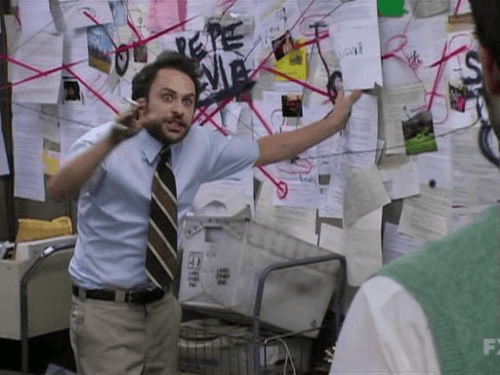
This is not just a problem for communities, especially if your community is one with broader influence outside its edges, which is true of “elites.” Something that always bothered me about Epstein — and I said this in my original post about my meetings with him — was that Epstein was a living demonstration that many “conspiracy theories” were true. Conspiracy theorists were all over the Epstein story long before most people in affected communities noticed that it was happening. Realizing this had a huge influence on me. My contact with Epstein, on top of some things I observed in 2020, were major factors that pushed me towards the right wing, because at the time, the right wing seemed willing to question the system and call it corrupt in a way that my left wing community was not.
Of course, what I eventually learned was that the right wing also didn’t have the answers I was seeking. I now maintain contact with a lot of people from many different times in my life and from different political backgrounds, and one thing I have learned is that a person’s politics does not seem to correlate, necessarily, with their integrity or the integrity of their organizations. There really are good people and bad people on both sides.
For years I have believed that the most important place to put my energy was in trying to build new institutions. Today, in 2026, I see this kind of thinking becoming more common. But we cannot simply build new institutions and expect them to work better than what we had before, without also understanding why the old ones became the way they did. And to me, this involves having the personal discipline to question a lot of other things: Community dynamics, spiritual and cognitive patterns, personal and political blind spots — the works.
As we do this, we also must support each other in doing it.
•
—
—
I read your post about meeting Epstein aloud to my partner on our way to weekend party which practices some of the social controls you describe in this latest piece. We reflected on it again on our ride back and talked tangentially a lot about many of the themes in your recent work on cancel culture and restorative justice and how layered those concepts are in how they are applied, what constitutes fairness. We spoke about how current systems leave us feeling unmoored and unmet in our needs so we resort to a kind of tribalistic/retributive behavior that doesn’t really move the needle on root causes of more nefariously antisocial behavior or how we can build structures that seriously disincentivize or make that behavior impossible without resulting in even more authoritarian outcomes.
I do think wealth inequality is a huge factor here. People who are obsessed with wealth for its own sake are, in my mind, mentally ill. When money no longer represents human effort, the connection to empathy for others is hobbled. Money to these people is a dissociative drug and when they have withdrawals they are willing to leave bodies littered in their wake in the pursuit of that power again.
There is no positive future when we have such wealth disparities. There will always be an “Epstein” under capitalism.
I don't know Lydia irl but anything Epstein related is more than likely the least interesting thing about her.
Great that you fiddled with LLMs but tread lightly.
Reality may bite but your brain could (and probably did) synthesize all of this information intuitively.